LA HISTORIA DE WINDOWS: DE WINDOWS 1.0 A WINDOWS 10
El primer sistema operativo Microsoft Windows fue lanzado en 1985. Ahora estamos casi 30 años, y muchas versiones de Windows, más allá. Casi cada 3 años Microsoft lanza una nueva versión de Windows. Es casi difícil imaginar que el anticuado Windows 1.0 fue el predecesor del hipermoderno Windows 10. Conozca en este blog cómo Windows se perfecciona y evoluciona hasta convertirse en el sistema operativo más utilizado del mundo.
Windows 1.0
En noviembre de 1985 se presentó al público Windows 1.0. Según el director general de Microsoft, Bill Gates, Windows 1.0 era un sistema operativo único desarrollado para usuarios intensivos de PC. Fue el primer sistema operativo en el que se utilizaba a menudo el ratón. En los sistemas operativos anteriores, el ratón apenas se utilizaba y los usuarios tenían que recurrir al teclado más a menudo para realizar ciertas acciones.
La primera versión de Windows contenía diferentes aplicaciones, como el programa gráfico Windows Paint. También se añadieron aplicaciones como Windows Write, un calendario y el Bloc de Notas. Para que los usuarios se acostumbraran al ratón, se añadió un juego de ordenador llamado Reversi. Los usuarios de PC podían jugar a este juego moviendo el ratón por el tablero de la pantalla.
To be fair, Windows 1.0 can’t be seen as a complete operating system. The software should be seen more as an add-on of MS-DOS. This means that Windows 1.0 also shared some (major) flaws with MS-DOS. This is the main reason this operating system was not widely used by PC-users. Fun fact: the first idea was to release Windows 1.0 under the name ‘Interface Manager’.
Windows 2
On 9 December 1987 the successor of Windows 1.0 was released to the market. Windows 2 was a bit more popular than the previous version. This was mainly due to several improvements that were added. For instance, the graphical interface was greatly improved. Furthermore, different programs could ‘overlap’ each other on the screen.
Also the option to minimize and maximize applications was introduced in Windows 2. Lastly, two ‘brand new’ applications where standard installed in this newest Windows-build: Excel and Word for Windows.

Windows 3
Windows 3 was announced by Microsoft on May 22, 1990. Especially the speed was significantly improved in the Windows version. This was mainly due to the introduction of the ‘Protected Modus’. Because of this, Windows 3 gained access to specific parts of the memory, which resulted in applications that could use more megabytes from the memory. Furthermore the system supported the use of 256 different colors. This gave Windows 3 a fresh and modern look.
En las actualizaciones de Windows 3.1 se introdujo el mundialmente famoso juego Buscaminas. Además, esta fue la primera versión de Windows que se vendió en CD-ROM. En total se vendieron más de 10 millones de copias de este sistema operativo Windows.
Windows 95
Windows 95 was released in, such as the name suggests, 1995. Two iconic elements where introduced in this operating system: the Start Menu and the Taskbar. This also was the first Windows operating system that had access to the internet. Also, external devices such as a mouse and keyboard could be easily connected thanks to the new ‘plug-and-play’ principle. Furthermore, 32 bit-programs where supported in this new operating system. A stunning 7 million copies of Windows 95 were sold worldwide in the first 5 weeks after the release.
Windows 98
Three years later, in June 1998, Windows 98 was introduced by Microsoft. Not many revolutionary adjustments were introduced in this operating system. That also might be the reason Windows 98 was not sold that much. A huge improvement though, was the support for USB-equipment. Because of this, USB-devices were much easier to use by PC-users. Also certain much used applications were introduced in this version such as Internet Explorer and Outlook Express. Another improvement was the introduction of the two navigational buttons ‘back’ and ‘forward’.
Windows ME y 2000
Según la mayoría de la gente, el sistema operativo Windows ME lanzado en septiembre de 2000 fue un completo desastre. El sistema operativo era conocido principalmente por su inestabilidad, sus problemas de instalación y sus fallos. Apenas se hicieron mejoras desde la versión anterior. Este fue el último sistema operativo de Windows que se basó en el antiguo MS-DOS. Diferentes aplicaciones nuevas como Windows Media Player y Windows Movie maker fueron añadidas a Windows ME.
Windows 2000 puede considerarse la versión empresarial de este sistema operativo. En Windows 2000 se introdujo la función de restauración del sistema. Tampoco era necesario reiniciar el ordenador después de realizar cambios en la configuración de Windows. Esto, en contradicción con todas las versiones anteriores de Windows.
Windows XP
One of the most iconic and revolutionary operating systems ever was introduced in October 2001. Windows XP is still seen by many people as the best operating system ever by many people. Windows XP was completely aimed at the ‘normal’ PC user. This translated itself into a very stable and user-friendly operating system with a modern and beautiful design.
For instance, the interface was available in three different colors: olive, blue and silver. In Windows XP USB 2.0 support was added, Furthermore .NET, IPv6 and SATA-hard disks bigger than 137 GB were supported in Windows XP. Lastly, Windows XP introduced the warning that a file ‘might’ contain a virus when computer-users open a downloaded file.

Hasta ahora Windows XP es el segundo sistema operativo más vendido de Microsoft, ligeramente por detrás de Windows 7. Un punto negativo de Windows XP tenía que ver con la seguridad. Era relativamente fácil para los piratas informáticos violar el cortafuegos y acceder a los archivos privados. Esto hizo que los ordenadores con Windows XP fueran un objetivo muy apreciado por los delincuentes de Internet.
Windows Vista
Windows Vista fue lanzado en 2007 por Microsoft. Un ajuste notable fue la introducción del tema Aero de Windows. En esta interfaz mejorada se añadieron elementos transparentes con un aspecto moderno.
Windows Vista no fue recibido con los brazos abiertos por el público. La razón principal fueron los requisitos de sistema de este sistema operativo. El sistema operativo exigía mucha más potencia que Windows XP. En muchos ordenadores, Windows Vista funcionaba con errores o no funcionaba en absoluto. Sin embargo, un determinado grupo estaba muy satisfecho con Windows Vista: los jugadores. Esto se debió principalmente a la introducción de DirectX 10.
Windows 7
Windows 7 fue el esperado sucesor de Windows Vista. El sistema operativo fue lanzado por Microsoft en octubre de 2009. Microsoft tenía el objetivo de eliminar todos los problemas que los usuarios de PC tenían con Windows Vista mediante el lanzamiento de Windows 7. Lo consiguieron con el lanzamiento de este nuevo sistema operativo. Windows 7 fue muy bien recibido por los usuarios de PC.
Una de las mejoras fue la renovada barra de tareas, con iconos más grandes y un aspecto más moderno. También se ha mejorado mucho la interfaz del tema Windows Aero. Todo ello se tradujo en menos errores y en un sistema operativo más estable y fácil de usar. Además, en Windows 7 se introdujo el reconocimiento facial.
Windows 8.0 y Windows 8.1
Windows 8.0 is one of the most recent operating systems by Microsoft and was released in October 2012. Windows 8.0 can be seen as an attempt by Microsoft to create a ‘hybrid’ operating system that functions the same on tablets, smartphones and computers. This rigorous change was not so popular by the bigger public.
A major adjustment was the completely redesigned user-interface. For example, within this Metro-theme the Start Menu and Start Button where removed. Furthermore ‘tiles’ and ‘widgets’ were introduced in Windows 8.0 Thanks to this users should get easier access to all installed applications. This re-design received a ton of criticism. Mainly because Windows 8 seemed to be optimized for touchscreens. Most computer-users however simply used a mouse and keyboard. This made Windows 8 not so user-friendly.
Windows 8 was much faster than previous operating systems by Microsoft. This was mainly due to the possibility to use USB 3.0-devices. Major improvements were released with the update of Windows 8.1. The most important one was the ‘reintegration’ of the Start Menu and Start Button. This significantly improved the user-friendliness for PC-users. The Windows 8.1 update was available (free) in the Windows Store since October 2013.
Windows 10
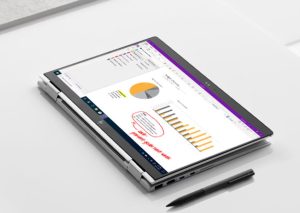
Windows 10 is the newest operating system by Microsoft. The software was released in 28 July 2015. In Windows 10 the Start Menu and Start Button ‘officially’ was reintegrated within the operating system. Another interesting new feature was the possibility to switch between computer and tablet mode. This is mainly useful for computers that work with a detachable keyboard and/or touchscreen. With Windows 10 Microsoft tries to give users of all Windows-machines ‘one universal operating system’ to improve the user-friendliness.

There is a big chance that this will be the last Windows operating system by Microsoft. Microsoft realized that people don’t want to adapt to a new operating system every couple of years. They stated that they want to focus on ‘updating’ their newest operating system instead of ‘redeveloping’ it all the time.
La rica historia de Windows
En este artículo quedó claro que los sistemas operativos Windows de Microsoft cambiaron significativamente en los últimos 30 años. Del simple y sencillo Windows 1.0 se ha pasado al moderno y fácil de usar Windows 10: el sistema operativo más utilizado del mundo. ¿También quieres trabajar con el sistema operativo Windows más reciente? Entonces, ¡consulte rápidamente las licencias originales y baratas de Windows 10 de SoftwareLicense4U! Todas las licencias se entregan en 5 minutos por correo electrónico.
¿Listo para actualizar?
Obtenga licencias auténticas con entrega instantánea y asistencia de por vida.